Loading...
Searching...
No Matches
Data Log Public APIs
Functions | |
| ERR_te | datalog_init_subsys (void) |
| Initializes the data log subsystem. | |
| ERR_te | datalog_deinit_subsys (void) |
| Deinitializes the data log subsystem. | |
| ERR_te | datalog_start_subsys (void) |
| Starts the data log subsystem. | |
| ERR_te | datalog_stop_subsys (void) |
| Stops the data log subsystem. | |
| ERR_te | datalog_init_handle (DATALOG_CFG_ts const *datalog_cfg, DATALOG_HANDLE_ts **datalog_handle_o) |
| Initializes and registers a data log handle. | |
| ERR_te | datalog_deinit_handle (DATALOG_HANDLE_ts const *datalog_handle) |
| Deinitializes a data log handle. | |
| ERR_te | datalog_run_handle (DATALOG_HANDLE_ts *datalog_handle) |
| Writes a GPS data entry to the log file if the logging interval has elapsed. | |
Detailed Description
Function Documentation
◆ datalog_init_subsys()
| ERR_te datalog_init_subsys | ( | void | ) |
Initializes the data log subsystem.
- See also
- datalog_init_subsys
Definition at line 137 of file datalog.c.
137 {
138 ERR_te err;
139
142 }
143
145
150
151 init_log();
152 init_systick();
153 init_neo6();
154
157 LOG_ERROR(
158 internal_state.subsys,
159 internal_state.log_level,
160 "datalog_init_subsys: cmd_register error"
161 );
162 return err;
163 }
164 LOG_INFO(
165 internal_state.subsys,
166 internal_state.log_level,
167 "datalog_init_subsys: subsys initialized"
168 );
169
171}
static struct internal_state_s internal_state
Singleton instance of the SysTick driver internal state.
Definition arm_cortex_m4_systick.c:33
CMD_CLIENT_INFO_ts datalog_cmd_client_info
Registration descriptor passed to the command subsystem.
Definition datalog.c:124
ERR_te cmd_register(CMD_CLIENT_INFO_ts *cmd_client_info)
Registers a client with the command subsystem.
Definition cmd.c:51
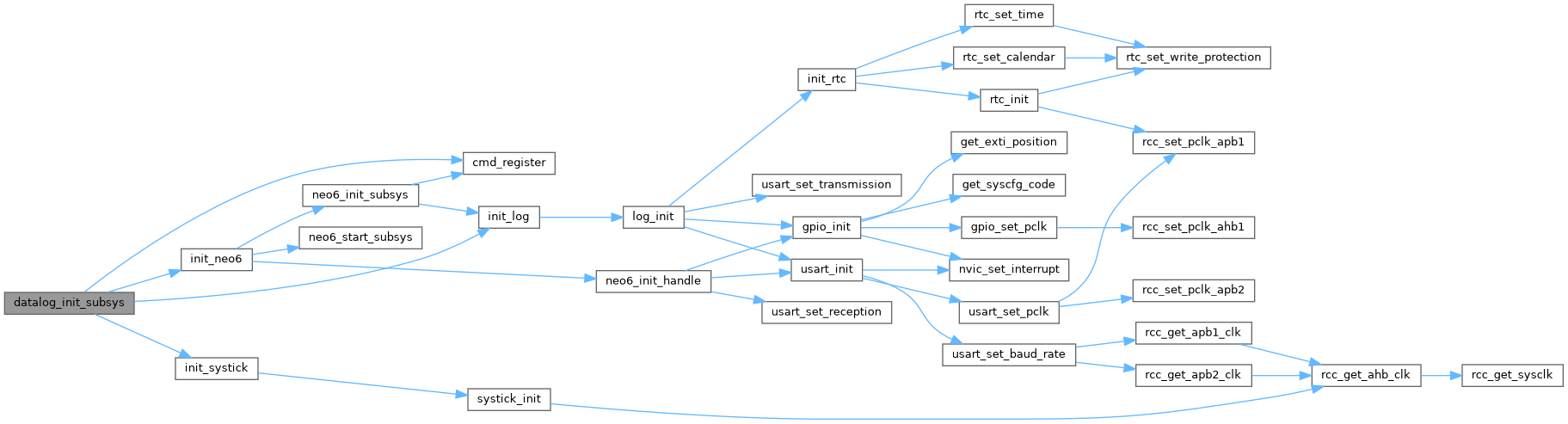
Here is the call graph for this function:
Here is the caller graph for this function:

◆ datalog_deinit_subsys()
| ERR_te datalog_deinit_subsys | ( | void | ) |
Deinitializes the data log subsystem.
- See also
- datalog_deinit_subsys
Definition at line 174 of file datalog.c.
174 {
177
179 }
180 else {
181 LOG_ERROR(
182 internal_state.subsys,
183 internal_state.log_level,
184 "datalog_deinit_subsys: subsys is not initialized"
185 );
186
188 }
189 LOG_INFO(
190 internal_state.subsys,
191 internal_state.log_level,
192 "datalog_deinit_subsys: subsys deinitialized"
193 );
194
196}
ERR_te cmd_deregister(CMD_CLIENT_INFO_ts const *cmd_client_info)
Deregisters a client from the command subsystem.
Definition cmd.c:66
Here is the call graph for this function:

◆ datalog_start_subsys()
| ERR_te datalog_start_subsys | ( | void | ) |
Starts the data log subsystem.
- See also
- datalog_start_subsys
Definition at line 199 of file datalog.c.
199 {
202
203 LOG_INFO(
204 internal_state.subsys,
205 internal_state.log_level,
206 "datalog_start_subsys: subsys started"
207 );
208 }
209 else {
210 LOG_ERROR(
211 internal_state.subsys,
212 internal_state.log_level,
213 "datalog_start_subsys: subsys not initialized or already started"
214 );
215
217 }
218
220}
Here is the caller graph for this function:

◆ datalog_stop_subsys()
| ERR_te datalog_stop_subsys | ( | void | ) |
Stops the data log subsystem.
- See also
- datalog_stop_subsys
Definition at line 223 of file datalog.c.
223 {
226
227 LOG_INFO(
228 internal_state.subsys,
229 internal_state.log_level,
230 "datalog_stop_subsys: subsys stopped"
231 );
232 }
233 else {
234 LOG_ERROR(
235 internal_state.subsys,
236 internal_state.log_level,
237 "datalog_stop_subsys: subsys not initialized or already already stopped"
238 );
239
241 }
242
244}
◆ datalog_init_handle()
| ERR_te datalog_init_handle | ( | DATALOG_CFG_ts const * | datalog_cfg, |
| DATALOG_HANDLE_ts ** | datalog_handle_o ) |
Initializes and registers a data log handle.
- See also
- datalog_init_handle
Definition at line 247 of file datalog.c.
247 {
248 uint8_t free_index;
249
251 LOG_ERROR(
252 internal_state.subsys,
253 internal_state.log_level,
254 "datalog_init_handle: subsys not initialized"
255 );
256
258 }
259
261 LOG_CRITICAL(
262 internal_state.subsys,
263 internal_state.log_level,
264 "datalog_init_handle: subsystem out of memory space"
265 );
266
268 }
269
270 if(!datalog_cfg) {
271 LOG_ERROR(
272 internal_state.subsys,
273 internal_state.log_level,
274 "datalog_init_handle: invalid argument"
275 );
277 }
278
279 bool found = false;
280
281 for(uint32_t i = 0; i < CONFIG_DATALOG_MAX_OBJECTS; i++) {
283 free_index = i;
284 found = true;
285 break;
286 }
287 }
288
289 if(!found)
291
292 // Mount filesystem
293 internal_state.datalogs[free_index].fr = f_mount(&internal_state.datalogs[free_index].fs, "0:", 1);
296 }
297
298 // Create / open file
299 internal_state.datalogs[free_index].fr = f_open(&internal_state.datalogs[free_index].fil, "0:datalog.txt", FA_CREATE_ALWAYS | FA_WRITE);
302 }
303
304 f_close(&internal_state.datalogs[free_index].fil);
305
306 str_cpy(
307 internal_state.datalogs[free_index].name,
308 datalog_cfg->name,
309 get_str_len(datalog_cfg->name) + 1
310 );
311 internal_state.datalogs[free_index].datalog_time = datalog_cfg->datalog_time;
313
314 internal_state.datalog_num++;
315
316 *datalog_handle_o = &internal_state.datalogs[free_index];
317
318 LOG_INFO(
319 internal_state.subsys,
320 internal_state.log_level,
321 "datalog_init_handle: handle %s initialized",
322 internal_state.datalogs[free_index].name
323 );
324
326}
int str_cpy(char *str_to, const char *str_from, uint32_t len)
Copies a null-terminated string into a destination buffer.
Definition common.c:333
uint32_t get_str_len(char const *str)
Returns the length of a string, excluding the null terminator.
Definition common.c:22
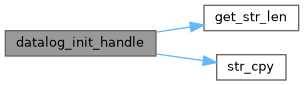
Here is the call graph for this function:
Here is the caller graph for this function:

◆ datalog_deinit_handle()
| ERR_te datalog_deinit_handle | ( | DATALOG_HANDLE_ts const * | datalog_handle | ) |
Deinitializes a data log handle.
- See also
- datalog_deinit_handle
Definition at line 329 of file datalog.c.
329 {
331 LOG_ERROR(
332 internal_state.subsys,
333 internal_state.log_level,
334 "datalog_deinit_handle: handle not initialized"
335 );
337 }
338
340 LOG_ERROR(
341 internal_state.subsys,
342 internal_state.log_level,
343 "datalog_deinit_handle: no such handle to deinitialize"
344 );
345
347 }
348
349 for(uint32_t i = 0; i < CONFIG_DATALOG_MAX_OBJECTS; i++) {
352 char name[name_len];
354
356
357 internal_state.datalog_num--;
358
359 LOG_INFO(
360 internal_state.subsys,
361 internal_state.log_level,
362 "datalog_deinit_handle: handle %s deinitialized",
363 name
364 );
365
366 break;
367 }
368
369 if(i == CONFIG_DATALOG_MAX_OBJECTS - 1) {
370 LOG_ERROR(
371 internal_state.subsys,
372 internal_state.log_level,
373 "datalog_deinit_handle: no such handle to deinitialize"
374 );
375
377 }
378 }
379
381}
struct datalog_handle_s DATALOG_HANDLE_ts
Opaque handle representing a data log instance.
Definition datalog.h:88
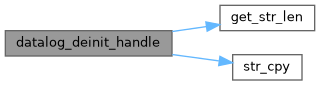
Here is the call graph for this function:
◆ datalog_run_handle()
| ERR_te datalog_run_handle | ( | DATALOG_HANDLE_ts * | datalog_handle | ) |
Writes a GPS data entry to the log file if the logging interval has elapsed.
- See also
- datalog_run_handle
Definition at line 384 of file datalog.c.
384 {
385 uint32_t time = systick_get_ms();
386
387 // Time interval has not been reached yet, return
390 }
391
392 // Open file
396 }
397
399 neo6_get_info(&neo6_info);
400
401 // Set up time string
403 char time_str[time_len];
405 time_str[time_len - 2] = '\r';
406 time_str[time_len - 1] = '\n';
407
408 // Write time string to file
411 f_close(&datalog_handle->fil);
413 }
414
415 // Set up latitude string
417 char lat_str[lat_len];
419 lat_str[lat_len - 2] = '\r';
420 lat_str[lat_len - 1] = '\n';
421
422 // Write latitude string to file
425 f_close(&datalog_handle->fil);
427 }
428
429 // Set up longitude string
431 char lon_str[lon_len];
433 lon_str[lon_len - 2] = '\r';
434 lon_str[lon_len - 1] = '\n';
435
436 // Write longitude string to file
439 f_close(&datalog_handle->fil);
441 }
442
443 // Set up orthometric height string
445 char ort_height_str[ort_height_len];
447 ort_height_str[ort_height_len - 2] = '\r';
448 ort_height_str[ort_height_len - 1] = '\n';
449
450 // Write orthometric height string to file
451 datalog_handle->fr = f_write(&datalog_handle->fil, ort_height_str, ort_height_len, &datalog_handle->bw);
453 f_close(&datalog_handle->fil);
455 }
456
457 // Set up movement speed string
459 char mov_speed_str[mov_speed_len];
461 mov_speed_str[mov_speed_len - 2] = '\r';
462 mov_speed_str[mov_speed_len - 1] = '\n';
463
464 // Write movement speed string to file
465 datalog_handle->fr = f_write(&datalog_handle->fil, mov_speed_str, mov_speed_len, &datalog_handle->bw);
467 f_close(&datalog_handle->fil);
469 }
470
471 // Set up movement direction string
473 char mov_dir_str[mov_dir_len];
475 mov_dir_str[mov_dir_len - 2] = '\r';
476 mov_dir_str[mov_dir_len - 1] = '\n';
477
478 // Write movement direction string to file
479 datalog_handle->fr = f_write(&datalog_handle->fil, mov_dir_str, mov_dir_len, &datalog_handle->bw);
481 f_close(&datalog_handle->fil);
483 }
484
486
487 f_close(&datalog_handle->fil);
488
490
492}
uint32_t systick_get_ms(void)
Returns the number of milliseconds elapsed since SysTick was initialized.
Definition arm_cortex_m4_systick.c:108
ERR_te neo6_get_info(NEO6_INFO_ts **neo6_info_o)
Returns a pointer to the internal GPS data structure.
Definition neo6.c:430
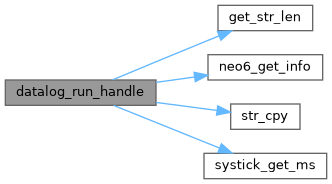
Here is the call graph for this function:
Here is the caller graph for this function: